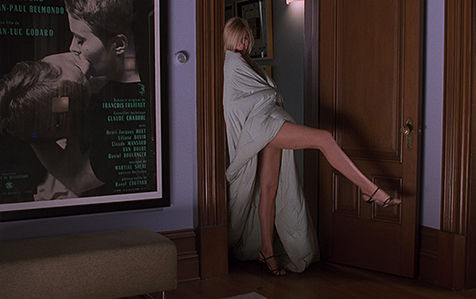
YOU'VE GOT MAIL: INTERIOR DESIGN BREAKDOWN
The aesthetic of “a girl and her apartment against the whole world” is almost impossible to understand without looking at the interiors of Nora Ephron’s movies.
Nora Ephron didn’t invent it. You can already feel the mood in Breakfast at Tiffany’s: a young woman living in a tiny apartment in a glamorous big city, making cheerful little excursions into the world outside.
And yet, without Ephron’s movies, it’s hard to imagine what the cozy apartment of Bridget Jones, Carrie Bradshaw’s nest, or even the interiors of Nancy Meyers’s heroines would look like.

Millions of modern Instagram accounts are built around some version of this fantasy: a girl living in her dream city, surrounded by a home that feels completely, unmistakably hers.
I think of it as urban romance: homes that smell like cinnamon, a cat on the windowsill, nostalgia for handwritten letters and children’s books, and Sunday visits to Grandma’s house.
You can see strong traces of cottagecore and country cottage style in Ephron’s interiors, too. But this is country cottage translated into an urban setting. The feeling of the countryside suddenly appearing in the middle of a city creates an entirely different visual language.
And it’s important not to confuse it with French country or Provençal style. Country cottage in the city has already been transformed. It has its own vocabulary.
Kathleen Kelly’s Upper West Side Brownstone
In You’ve Got Mail, Kathleen Kelly lives at 328 West 89th Street on the Upper West Side, in a classic New York brownstone. The building was used for the exterior of Kathleen’s home, while the apartment interiors were filmed on a soundstage.

Let’s start with the living room. The fabric on Kathleen’s sofa appears to be Norfolk Rose by Waverly, the American textile house founded in 1923. Waverly became known for floral prints, stripes, and plaids, many of which were produced for decades and occasionally reissued — giving them that unmistakable vintage feel.


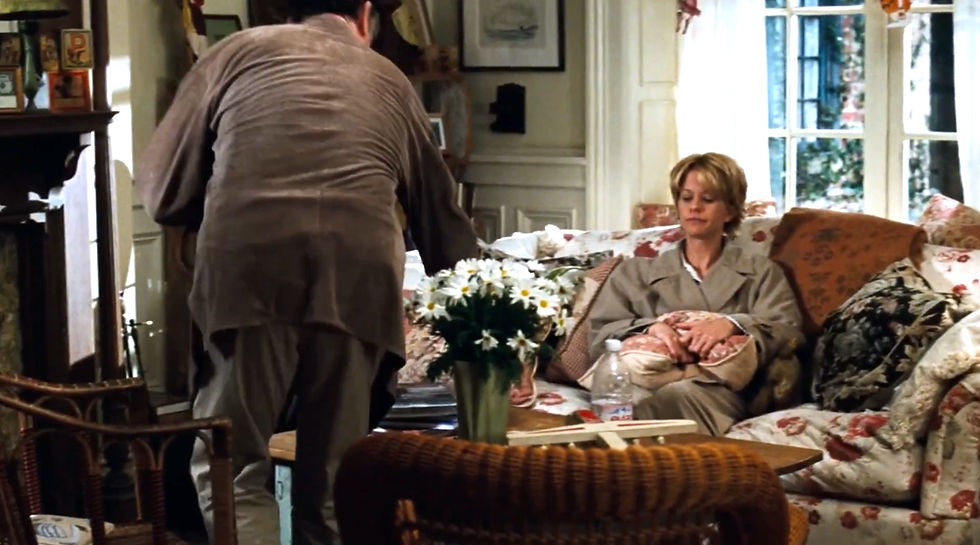
Original vintage Waverly fabrics can still turn up on Etsy, eBay and other secondhand marketplaces. Some patterns have also been reproduced by other manufacturers, sometimes under the same names, including Norfolk Rose. The print has become a natural fit for shabby chic and cottagecore interiors, which is why it keeps resurfacing in vintage decor.
The Desk: Where the Magic Happens
On the way from the living room to the bedroom the furniture was rearranged slightly in some shots — there’s Kathleen’s little workspace. And this is such an important part of the “girl and her apartment against the whole world” aesthetic: the desk is where dreams happen. Ambitious projects, private thoughts, and, in Kathleen’s case, life-changing emails. Let’s look at some of the details.

On the wall is an ink-and-pencil illustration by Hilary Knight from Eloise, the beloved children’s book created with writer Kay Thompson. The first Eloise book was published in 1955, and its heroine is a mischievous little girl who lives at New York’s Plaza Hotel — Home Alone fans will recognize the setting.
Knight’s original illustrations can sell for serious money at auction, while reproductions are much easier to find in bookstores and on Etsy.


I keep wondering: is this the original here, or a reproduction?
Either way, it’s a very clever choice for Kathleen’s apartment. Eloise embodies that particular New York archetype of the mischievous, independent city girl — a lineage that runs from Holly Golightly in Breakfast at Tiffany’s through Nora Ephron’s heroines and eventually into the worlds of Nancy Meyers.

The lamp on Kathleen’s desk looks like a vintage 1940s piece, with a painted or glazed ceramic urn-shaped base.

The chair is antique as well. Similar pieces can still be found on vintage marketplaces like Chairish, often listed as Regency-style satinwood-finish cane-seat armchairs.
The Regency style emerged in England in the early 19th century and is known for elegant proportions and expensive materials such as walnut and mahogany, sometimes with inlay, brass or bronze details, and carving.
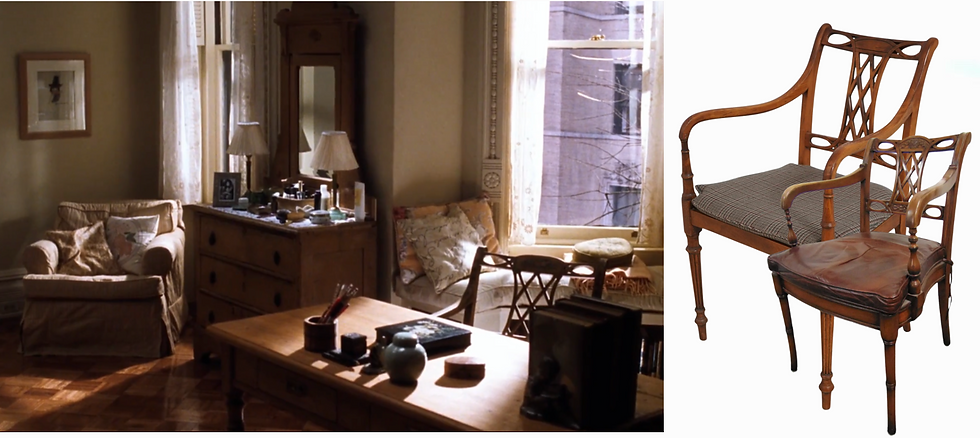
One thing I particularly like about these chairs: many vintage versions come with a removable seat cushion. Which means you can change the upholstery — a small detail that makes mixing old furniture and experimenting with rearrangements much more fun.
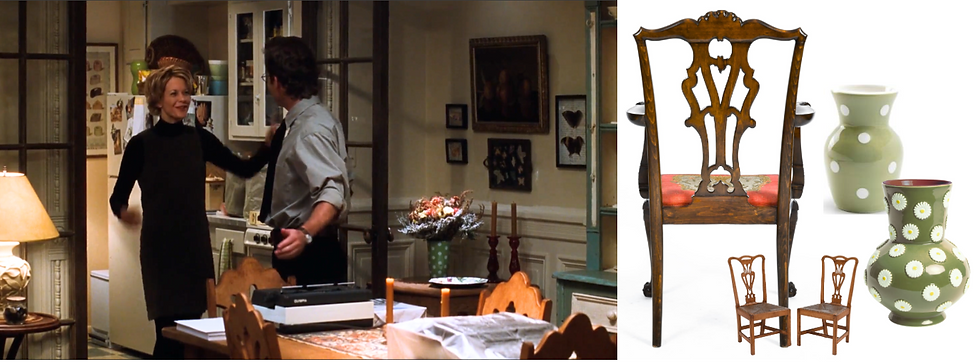
There are similar chairs in the kitchen, too — classic Chippendale-style chairs, very close to the ones Charlotte and Harry had in Sex and the City.
And that sweet little no name polka-dot vase?
I found a version with little daisy-like circles that would fit perfectly into Kathleen’s apartment. Considering her love of daisies, I have a feeling she would approve.
The Bedroom: Cottagecore Before It Had a Name
Kathleen’s bedroom is full of small-scale patterned textiles, and the striped upholstery on the headboard is no accident.

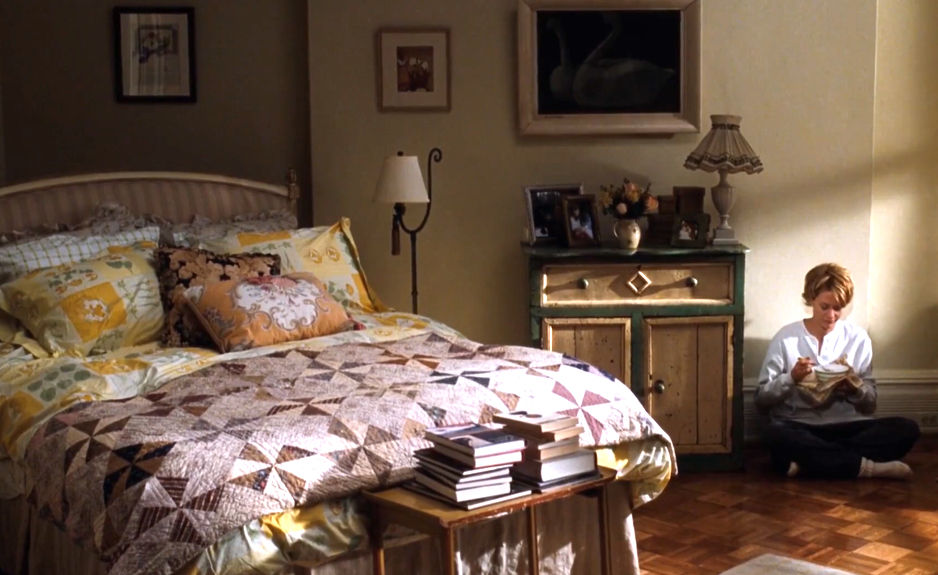
This is one of the things that separates cottagecore from Provençal or shabby chic: it isn’t really a single, pure style. The whole point is to mix. Floral prints can sit next to stripes, English checks, little vintage motifs, and whatever else happens to work.
For bedding with this kind of look, try searching for “vintage-inspired floral bedding set.” Brands such as MyWinifredand vintage Wamsutta sheets often turn up in this territory.

A similar lamp with a little skirted, bell-shaped shade and a vaguely Rococo feel is also easy to find in American vintage stores and on Etsy. Try searching for “table lamp with pleated bell-shaped fabric shade” or “vintage pleated shade table lamp.”
A Home Full of Storybook Details
In the movie, Kathleen owns a small children’s bookstore that she inherited from her mother. So it makes perfect sense that her apartment is filled with nostalgia, sweetness, and little storybook references.nThere are even hanging paper decorations inspired by Winnie-the-Pooh.

You can find similar pieces by searching for “Winnie the Pooh hanging decorations” on Amazon.
It’s the kind of detail that could easily feel too cute in another interior. Here, it works because the whole apartment has a sense of childhood woven into it — without ever becoming childish.
The Kitchen Is the Best Part
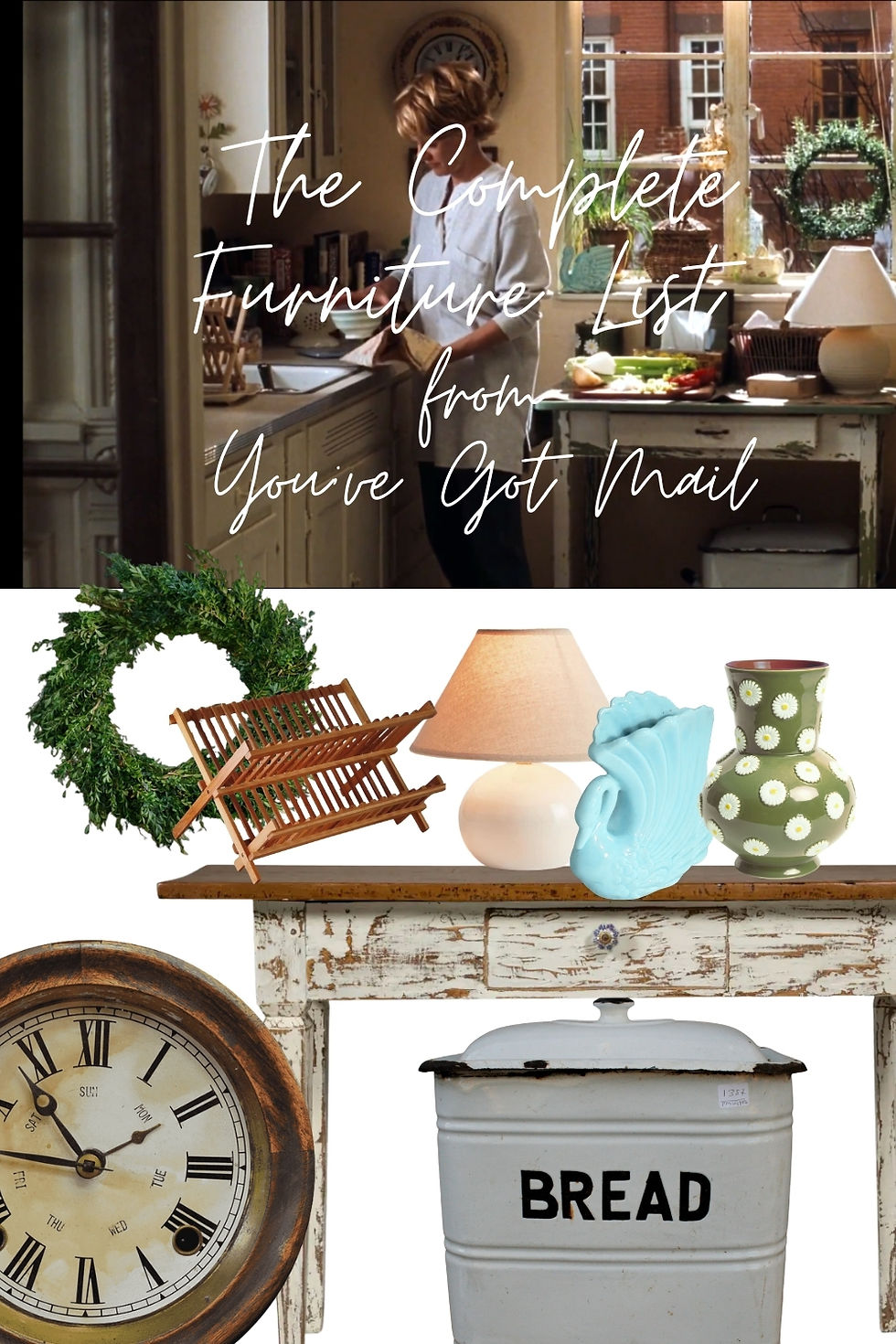
And then there’s my favorite part of Kathleen’s apartment: the kitchen. Almost every object here is the kind of thing you can still find today.

One of the more specific pieces I managed to identify is a 1940s swan vase by Royal Haeger.
Royal Haeger was a popular American ceramics manufacturer whose pieces were especially recognizable for their colorful glazes. Its vintage pieces are still relatively easy to find on the secondary market.
When you see vintage American ceramics like this in a movie interior, they often do something much more important than simply “decorate” a room. They give it a sense of American history — the feeling that the objects existed before the character did and might still be there after the movie ends.
And that’s exactly what makes Kathleen’s kitchen feel so convincing.

A few more details worth stealing:
A simple window wreath — the kind you can find at Terrain or easily make yourself.
A vintage wall clock: try searching for “antique round brown wood-framed analog wall clock.” I found a nearly identical version.
A wooden dish rack: search for “wooden dish rack for kitchen countertop.” If you’re recreating this kind of kitchen, it’s an easy detail to add.
A glamorous lamp sitting right on the kitchen counter. Kathleen’s looks like a 1980s Dutch ceramic lamp, with a chunky white glazed base, ribbed details, and a rounded shape. Try “vintage 80s Dutch ceramic table lamp.” But the important thing here isn’t the exact lamp — it’s the decorating trick of putting a real lamp on the kitchen counter. I’ll come back to this little move in my guide to creating this look.
A small vintage console table: try “farmhouse distressed console with single drawer.” Distressed refers to that deliberately worn finish where the wood shows through the paint. Done well, it gives furniture the feeling of having been around forever.
A vintage enamel bread bin: search “vintage enamel bread bin with lid” on Etsy.
A Roman shade. I wrote about these in my interior breakdown of It’s Complicated, and similar styles are still easy to find at West Elm.

The Grandfather Clock
In the entryway, Kathleen has an antique floor clock very similar to the one I spotted in my interior breakdown of Something’s Gotta Give.
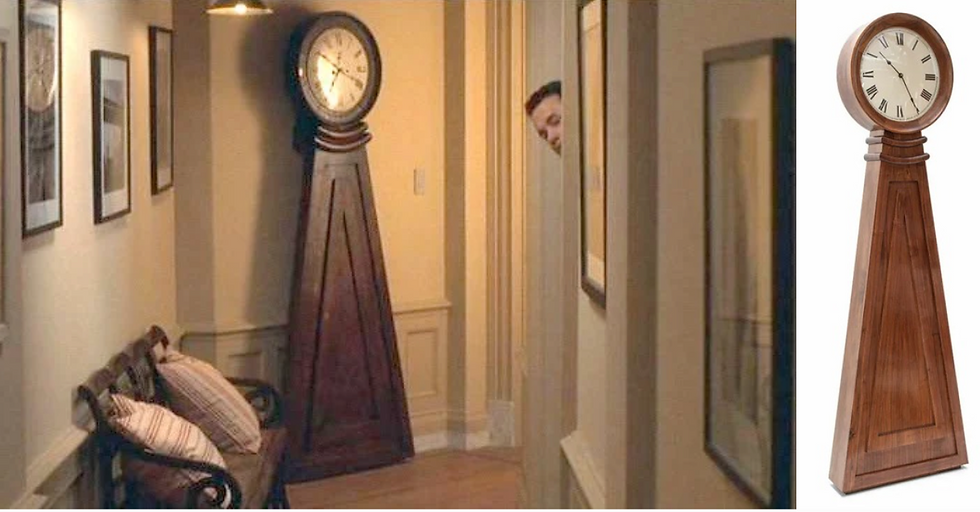
It’s a grandfather clock, and there’s something about one standing in the hallway of an Upper West Side home that instantly makes the space feel older, more layered, and more lived-in.

And the entryway has one more recurring detail: botanical prints.
They appear throughout the apartment, but especially in the hallway. Similar prints — sunflowers, flowers, old botanical studies — are easy to find on Amazon and Etsy by searching for “antique botanical print.”
The ones hanging in Kathleen’s home remind me of the famous Besler botanical prints, based on the work of Basilius Besler, whose monumental Hortus Eystettensis was first published in the early 17th century.
You don’t need an antique original to get the look, either. Reproductions can cost just a few dollars.
And somehow, all of these details bring us back to the same idea.

Kathleen’s apartment doesn’t look like someone went shopping for “cottagecore decor.”
It looks like a city girl collected little pieces of the countryside, childhood, family history, books, flowers, and old America — and somehow made them all belong together.
That’s the trick.
If you want to bring Provençal and country elements into an urban home without ending up with a generic “grandma” look, the mix matters more than any individual piece.